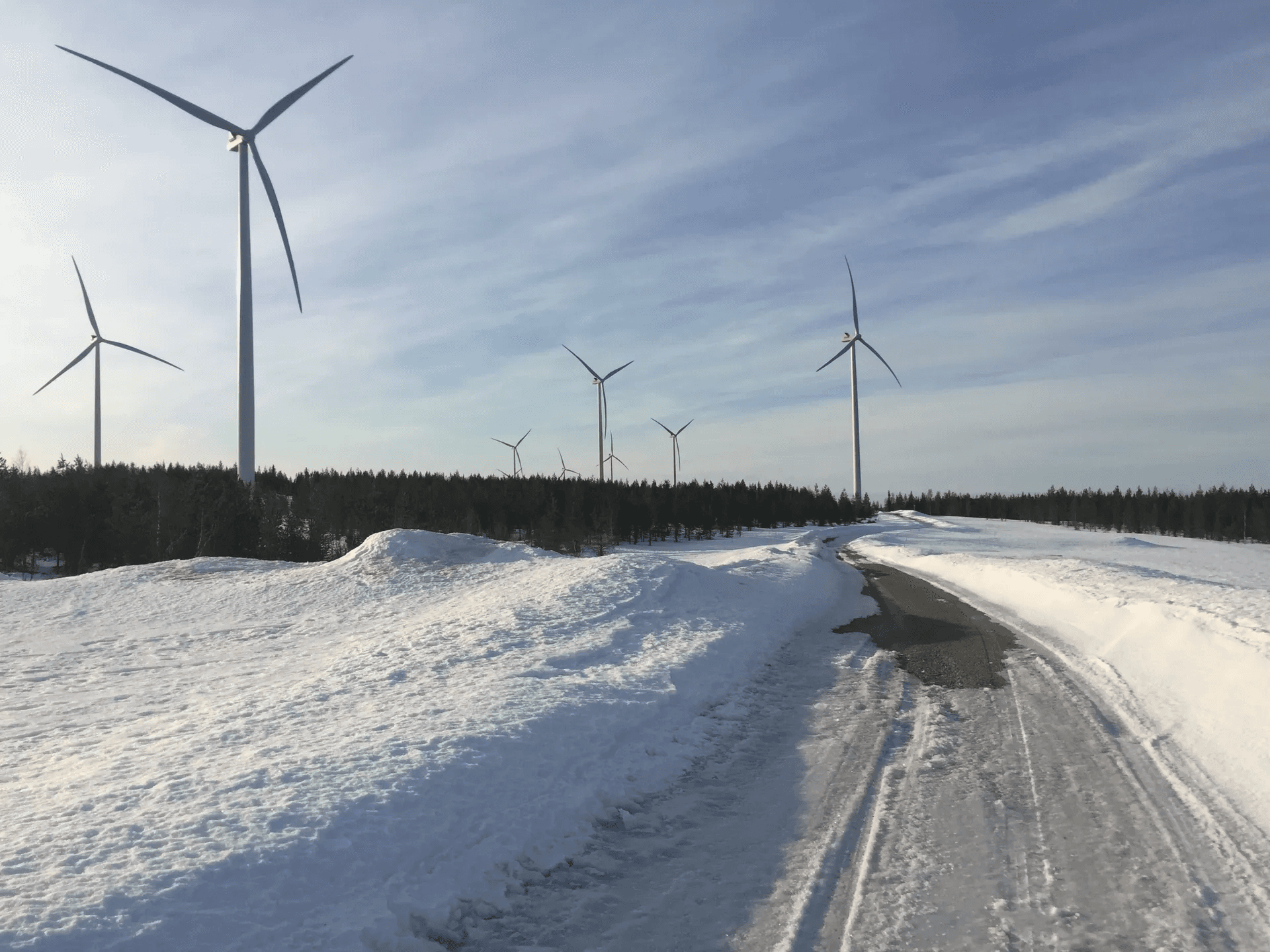
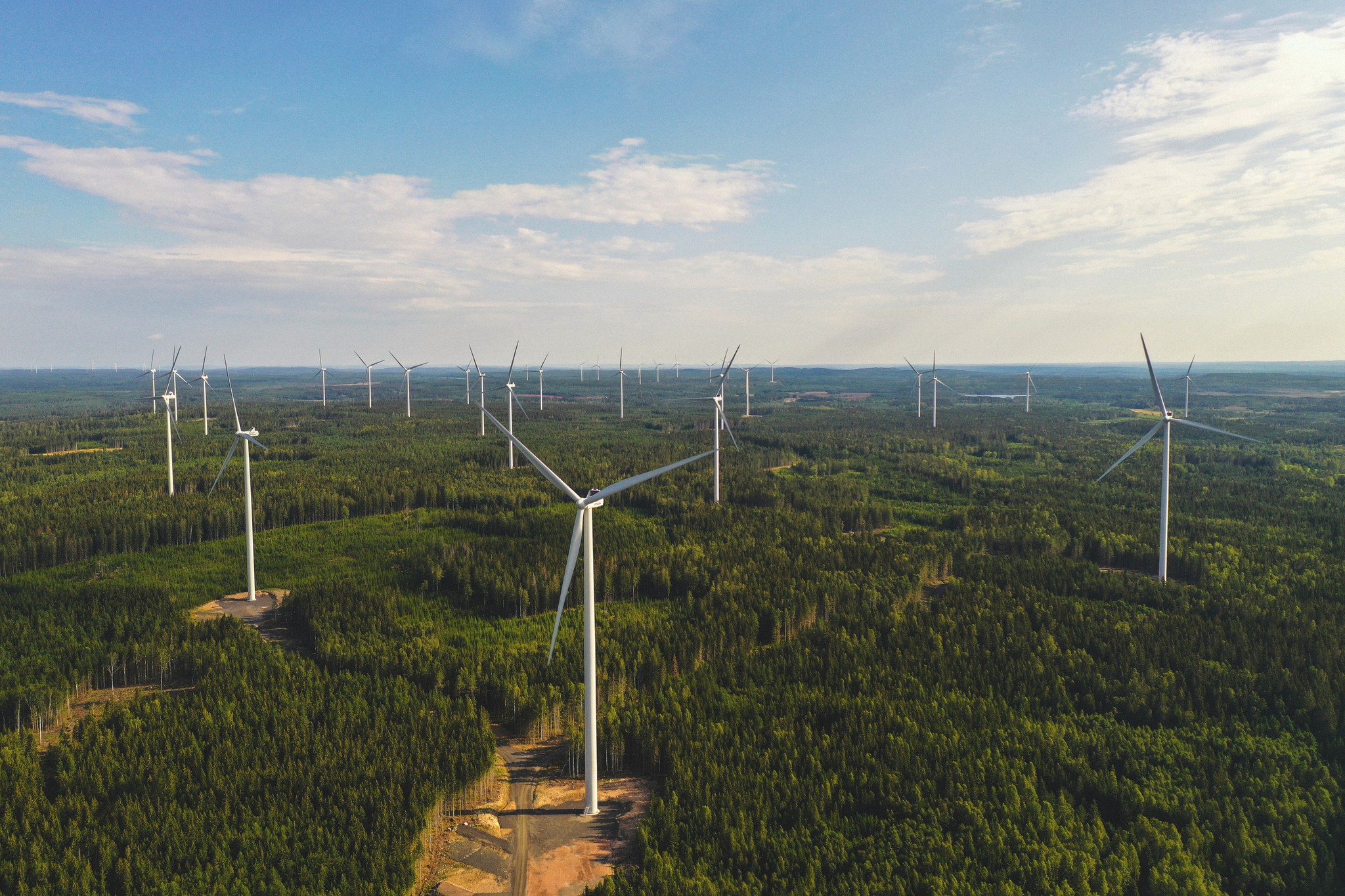
Sjönnebol Wind Farm
Project development
Great opportunities in Sjönnebol
Sjönnebol, Säffle
Several political parties in the municipality are, as of autumn 2025, explicitly opposed to establishing wind power in Sjönnebol. Given the current situation, we will postpone submitting an application for an environmental permit. The site under investigation is located 13 km southeast of the Säffle urban area and is called Sjönnebol after the property on which it is situated. The area has been designated as being of national interest for energy production and has previously been assessed as suitable in terms of location for wind power.
Annual Production
115GWh
Number og turbines
5

About the Project
Proposed layout is for five wind turbines with a maximum total height of 250 meters, an installed capacity of approx. 35 MW and an annual production of approx. 120 GWh. That is as much electricity as the average household electricity consumption of 24 000 households.
At Aneo, we want to develop renewable energy in close collaboration with the local community. We are convinced that together we can contribute to the necessary climate transition and meet the growing demand for electricity with sustainable solutions. With long experience and a strong commitment to both the environment and the local community, we want to be a safe and responsible partner in the expansion of wind power in Sjönnebol.
Wind power projects affect both people and the environment. That is why it is important to us that local stakeholders are given the opportunity for insight and influence during the process. In addition to the municipality giving its approval, we need to listen to local perspectives and adapt the project based on the knowledge gathered through consultations, dialogues and the surveys carried out in the environmental impact assessment.
Through dialogue with the municipality and residents, we have gained valuable knowledge about areas that are particularly important for outdoor recreation and leisure. The eastern shore of the isthmus has been designated as a LIS area (rural development in waterfront locations), and in light of this we have chosen to reduce the original project area.
In the process, it is important to us to map and take into account all input from the municipality, residents and businesses so that together we can create the best possible conditions for the Sjönnebol wind power project.
Consultations with the public and those particularly affected are currently underway. The comments collected will be compiled and incorporated into the environmental impact assessment. Aneo plans to submit an application for an environmental permit during the winter of 2025/2026.
Why wind power in Värmland?
The energy situation
After being stable for many years, uncertainty has increased, with unpredictable electricity prices and concerns about power shortages and electricity supply. The transition to a more climate-friendly society, increased electrification, and new energy-intensive businesses are expected to lead to a significant rise in electricity consumption.
Energy-intensive industry
The government is also considering a proposal for compensation to nearby residents living within 8-10 times the total height of the wind turbines. The compensation is calculated based on the park’s electricity production. Depending on electricity prices, turbine output, and determined levels, residents in the vicinity could share between 400,000–800,000 kronor per year during the lifespan of the park.
Tightened requirements
The demand for electricity is expected to rise significantly in the coming years as the industrial and transportation sectors transition to fossil-free solutions. The goal for Sweden to be climate-neutral by 2045 places high demands on the availability of fossil-free energy. This transition is already noticeable in Värmland.
Värmland's needs are driven by energy-intensive industries
Värmland uses approximately 6 terawatt hours (TWh) of electricity per year, more than many other counties outside metropolitan areas. The industry, which is electricity-intensive, accounts for 49 percent of the total electricity consumption, while housing accounts for 18 percent, according to an analysis commissioned by the County Administrative Board of Värmland in 2022.
Why Aneo?
The renewable energy group Aneo was established in the fall of 2022 through a collaboration between the energy company TrønderEnergi and the investment fund HitecVision. We have just over 300 employees, with our headquarters in Trondheim.
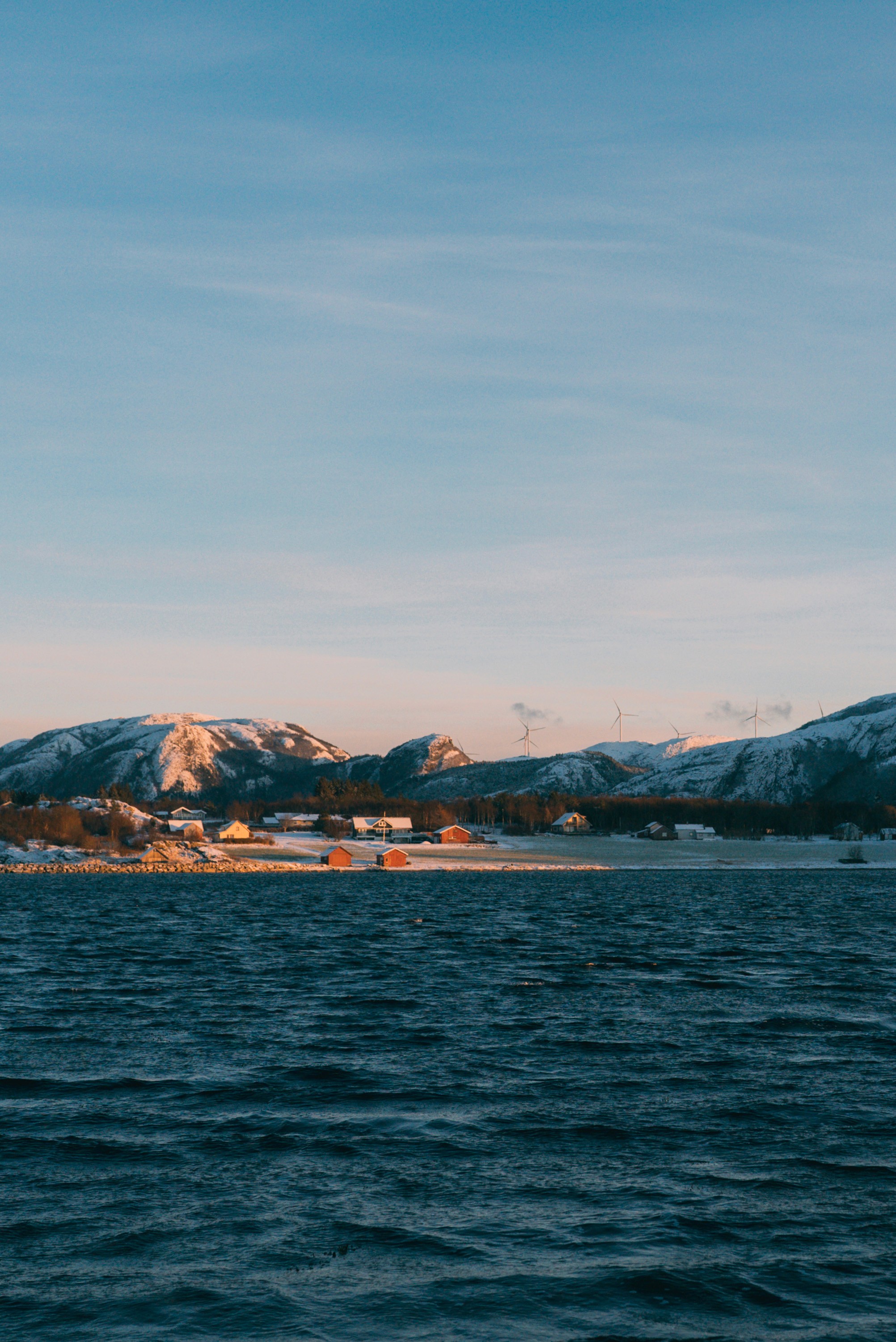
Aneo is built on 70 years of experience in developing and operating large power projects and owns and operates nine wind farms in Central Norway, as well as two in Sweden and one in Finland. In fact, despite our modest size, we are Norway's second-largest developer of wind power. We operate more than 200 wind turbines and monitor production around the clock for optimal operation, efficiency, and safety.
We have extensive experience collaborating with municipalities, where we have built strong relationships with both residents, politicians, and the administration. Together with local authorities, we are creating the energy solutions of the future, with a focus on safety and presence in the local community.
One of the things that sets us apart from most of our competitors is that when Aneo seeks to build a wind power plant in a Norwegian municipality, it's with long-term intentions in mind, not to sell the project or power plant onward. We invest to build, build to own, and own to operate. This means that we are here now, during any construction process, and of course, every single day throughout the power plant's lifespan.
The authorization process
The Authorization Process
A wind farm such as Sjönnebol carries a risk of environmental impact. This means that the permitting process follows a predefined structure: Consultation with the County Administrative Board on how an environmental impact assessment (EIA) should be prepared. Preparation of an environmental impact assessment for the planned operation. Compilation of an application, including the environmental impact assessment and technical description, which is submitted to the responsible permitting authority, in this case the Environmental Review Delegation (MPD) at the County Administrative Board of Örebro.
What does a consultation entail?
Comments submitted during the consultations become part of the work on the continued planning and environmental impact assessment (EIA). Before a wind farm is established, consultations are held with, among others, the County Administrative Board, the municipality, and individuals who may be particularly affected by the wind farm. Consultations are also carried out with other authorities, organizations, companies, and members of the public who may be affected by the project. During the consultations, the location, scope, design, environmental effects, and the content of the upcoming EIA are discussed.
What happens after the consultation?
After the consultations are carried out, often multiple times, the developer prepares an Environmental Impact Statement (EIS). This is compiled with conducted investigations, consultation documents, and technical descriptions into an application that is submitted to the Environmental Testing Delegation (ETD) at the county administration. The EIS focuses on the environmental impacts that may arise as a result of the activity. The county administration often requires supplements to the application. Once it is deemed complete, it is made public, and the general public and affected parties have the opportunity to comment again. At the same time, the county administration must ask the municipality to approve the project. Once all statements are received, and the municipality has provided its response, the ETD can decide to approve or reject the application. The decision can be appealed to the Land and Environment Court.
Stakeholders in the decision-making process
The Municipality Before the county administrative board can make a decision, the municipality must approve the project. The municipality’s decision involves an assessment of whether the wind power project is a suitable use of land and resources from a sustainable perspective. The decision should be based on the municipal plan that applies to wind power, but the plan is only advisory. If new information has emerged since the plan was adopted, there may be grounds for a new assessment. The municipality must always determine what constitutes appropriate land use, even if there is no updated municipal plan. There are no specific rules for how the municipality must respond in the permit process, apart from the general requirements of objectivity and impartiality in public administration. If a municipality is opposed to the establishment of a wind farm, this should be made clear already during the consultation process. Otherwise, the developer risks incurring unnecessary costs for the permit application process. The County Administrative Board The County Administrative Board provides planning documentation and assesses municipal plans and detailed development plans. During the consultation before an application is submitted, it provides planning documentation and descriptions of areas of national importance and protected areas. It also ensures that the environmental impact assessment has the correct scope and direction for the application process. The County Administrative Board also determines whether the activity can be expected to have significant environmental impact. Its environmental department handles applications in cooperation with the Environmental Permits Board. The Environmental Permits Board (MPD) The Environmental Permits Board (MPD) is an independent decision-making body within the County Administrative Board that examines permit cases for so-called environmentally hazardous activities under Chapter 9 of the Environmental Code and reviews existing permits under Chapter 24 of the Environmental Code. The MPD consists of a chair, who is a legally qualified judge, and an environmental expert with technical expertise. Decisions are normally made based on a proposal from a case officer at the County Administrative Board’s environmental protection department. MPD decisions can be appealed to the Land and Environment Court. Land and Environment Court The Land and Environment Courts are special courts that handle cases concerning environmental and water issues, property formation, and planning and building matters. The five Land and Environment Courts are part of the district courts in Nacka, Vänersborg, Växjö, Umeå, and Östersund. The Land and Environment Court of Appeal is part of the Svea Court of Appeal.
Efficient use of the planning area
The project area is 300 hectares, and the proposed layout is for 5 wind turbines with a maximum total height of 250m. Wind Farm Sjönnebol is estimated to supply 115 GWh of electricity annually to the local grid, to be used by the local community. The site has favorable wind conditions and few conflicting interests. The Armed Forces have no objections to the current establishment area in their early statement. Civil aviation has no conflicting interests in the area.
Prior to the construction of the wind farm, roads within the project area will be reinforced and widened to handle the heavy transports involved in the establishment of wind power.
A detailed road investigation will be conducted to ascertain the transport routes and access roads from the public road network, as well as the measures needed to secure the transports.

Documents